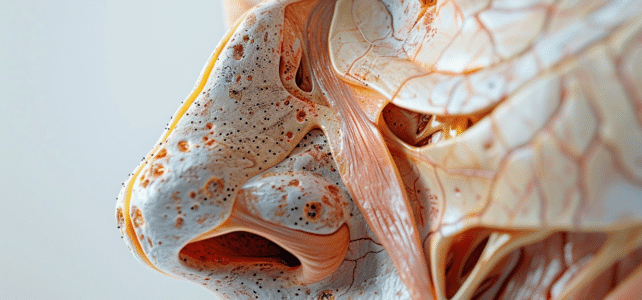
At the heart of human expression and breathing, the nose occupies a central position on the face. This complex structure is much more than just a sensory organ. It plays a fundamental role in air filtration, olfaction, and even in voice modulation. The configuration of the nose, with its nasal cavities, sinuses, and the cartilage that shapes it, reveals an anatomical design that is as elaborate as it is functional. This detailed exploration of nasal anatomy uncovers the mysteries of this often-underestimated organ and explains how it contributes to our daily well-being and our interaction with the world.
The internal structure of the nose: bones, cartilages, and soft tissues
The bones form the foundation of nasal anatomy. The nasal pyramid is formed by the nasal bones as well as the lateral walls of the maxillary bones. For surgeons, mastering these structures is crucial: they may need to resect the anterior part of the nasal bones to correct a bump on the bridge of the nose.
See also : How much does raw foie gras cost?
The cartilages of the nose, including the alar, triangular cartilages, and the nasal septum, are essential for defining the shape of the tip of the nose and its functionality. Surgical techniques to shape these cartilages are diverse and may include treating a cartilaginous bump to achieve the different types of noses desired by patients.
The skin covers these bony and cartilaginous structures. The thinness of the skin on the bridge of the nose allows the bony and cartilaginous contours to show through, while its greater thickness at the tip can influence the persistence of post-operative edema. The thickness of the skin is therefore a determining factor in the aesthetic results of nasal surgery.
Related reading : Portage company: How does it work?
Underneath, the hypodermis plays a significant role; it is a layer of fatty tissue that can be removed to refine a tip of the nose deemed too thick. Surgeons must accurately assess the thickness of the hypodermis to achieve a natural and harmonious result.

The functions of the nose and their link to facial anatomy
The cartilages of the nose, in addition to defining nasal aesthetics, play a fundamental role in respiratory functions. They not only provide support for the structure of the nose but also modulate the shape of the tip during facial expressions and control the opening and closing of the nostrils. The complexity of these mechanisms makes surgical precision essential to preserve or enhance nasal functions during interventions on the cartilages.
The bones of the nose, fundamental elements of nasal anatomy, provide structural support for the nose and the upper airways. Their integrity is essential for optimal breathing, highlighting the importance of surgical techniques that respect the physiological role of the nasal bones while achieving the desired aesthetic goals.
As for the muscles of the nose, they are responsible for controlling the opening of the nostrils, thus facilitating the passage of air, and contribute to the richness of facial expressions. The dilator muscle of the nostrils, for example, directly influences respiratory capacity, while the depressor muscle of the septum can alter the appearance of the tip of the nose during certain facial movements. Discerning these subtle interactions is vital for any intervention aimed at modifying the nasal musculature.
The ligaments of the nose maintain the structural integrity and shape of the nose, which are crucial for the facial profile. Ligaments such as the Pitanguy and interdomal ligaments are targeted during reconstructive procedures to improve the symmetry and projection of the tip of the nose. Understanding their role and interaction with other structures is essential to ensure the maintenance of nasal functions after surgery.