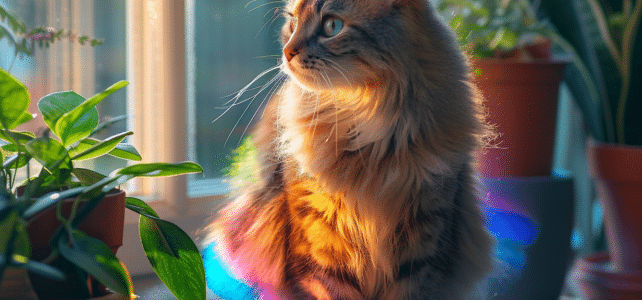
Domestic cats showcase a color palette and patterns that are as varied as they are fascinating, the result of complex genetics and a long history of evolution and domestication. Some specimens stand out with particularly rare and intriguing colorations, capturing the interest of scientists and cat enthusiasts worldwide. Unusual shades such as smoke black, cinnamon, or patterns like ticked tabby spark curiosity and raise questions about the hereditary mechanisms at play. These exceptional cases provide insight into genetic richness and reflect biodiversity within the domestic feline species.
The genetic mysteries behind the color palette of domestic cats
The cat, in its splendid diversity, is a living witness to genetic evolution. Scientists diligently study colors in cats, including the fascinating shades of eyes. Domestic cats, like their cousins the tigers and snow leopards, display a remarkable diversity of eye colors, ranging from bright yellow to deep blue. Research suggests that the common ancestor of felines likely had a limited color spectrum, dominated by gray and brown tones.
Related reading : The Fascinating World of Schott: A Story of Style and Innovation
The color of cats’ eyes is primarily determined by the concentration of two pigments: eumelanin, responsible for brown eyes, and pheomelanin, which contributes to yellow eye color. A genetic mutation that reduced the level of eumelanin may have allowed for the emergence of gray color, marking a significant step in the evolution of the feline color palette. While in humans, eye color can serve as a predictor for certain diseases, no convincing correlation has been established in cats between eye color and other health or behavioral characteristics.
However, the tricolor cat, with its coat blending three distinct colors, continues to spark curiosity. This phenomenon, often linked to the sex of the feline, is a genetic enigma that experts are trying to decipher to better understand the hereditary mechanisms governing coat color. These exceptional variations illustrate the richness of the genetic heritage of felines and enlighten scientists about the evolutionary forces that continue to shape vision and color in the animal kingdom.
See also : The challenges and opportunities of wage portage: a revolution in freelance work
Rare phenomena and colorimetric peculiarities in cats
The tortoiseshell cat, with its patches of black, orange, and sometimes white, is a remarkable example of the whims of feline genetics. This unique appearance, which seems hand-painted, is the result of the limited color perception in cats, a legacy from their ancestors requiring optimized night vision for hunting. Recent studies conducted by researchers such as Julius Tabin, affiliated with Harvard University, and published on platforms like BioRxiv, seek to understand how these unique patterns develop and what the evolutionary implications behind them are.
By observing tricolor cats, scientists like Shu-Jin Luo, an evolutionary geneticist at Peking University, ponder the potential influence of sexual selection in fur color preferences. Cat owners can attest to the visual appeal of these coats, but what fascinates experts is understanding how these traits may have been favored throughout feline evolution.
The health of cats is often considered in the study of coat colors, although, as noted by Juan Negro, an evolutionary biologist at the Doñana Biological Station, no solid correlation has been established between color and health status. What is clear is that black and white are not merely colors: they reveal complex stories of survival and adaptation. Observing colors in cats is not just a pastime for animal lovers; it is an open window into the mysterious world of evolutionary biology.