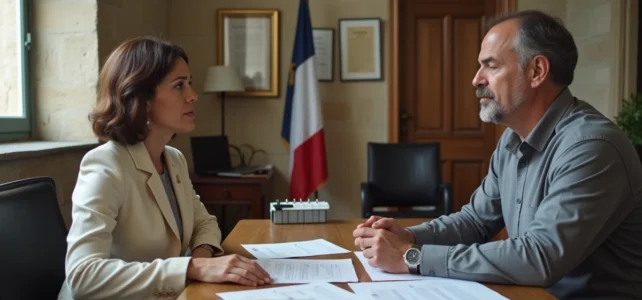
A refusal of a wedding date by the town hall does not mean a refusal to marry. The distinction is crucial: the civil status officer cannot oppose your union without legal grounds, but they can refuse a specific time slot. Understanding this nuance allows for quick action, especially when a short visa reduces the maneuvering window to just a few days.
Binational couples and short visa: the date refusal that jeopardizes the marriage
For a binational couple where one spouse holds a short-term visa, a date refusal can make the marriage materially impossible on French soil. The deadline for publishing the banns (at least ten days after submitting the complete file) leaves very little room when the visa only covers two or three weeks.
Related reading : Exploring the Different Health Communication Systems: What Are the Challenges and Solutions?
We observe that small municipalities exacerbate the problem by only celebrating weddings on Fridays or Saturdays. If the only date compatible with the visa expiration falls on a Monday or Wednesday, the mayor may refuse on the grounds that this day is not included in the usual ceremony schedule.
The French consulate in the foreign spouse’s country of residence then becomes a direct alternative. The marriage can be celebrated there by the consular authority, without depending on a town hall’s schedule. The procedure requires a similar file (certificate of capacity to marry, publication of banns at the consulate), but the consular calendar often offers more flexibility than a rural municipality. Several articles on Passion Mariage detail the most common reasons for refusals and the associated remedies.
You may also like : Must-Have Songs to Energize the 12 Months Game at Your Wedding
Another option: submit the file simultaneously in the municipality of residence of the French spouse’s parents. The Civil Code allows marriage in the municipality where one of the future spouses, or one of their parents, has their home or residence. Multiplying submissions increases the chances of finding a time slot compatible with the visa.

Wedding date refusal: what the mayor can and cannot do
The mayor, as a civil status officer, is obliged to celebrate marriages. They cannot refuse to marry you without a reason provided by the Civil Code (incomplete file, opposition from the public prosecutor, legal incapacity of one of the future spouses).
On the other hand, the mayor has the power to organize public service. They set the days and times for celebrations by decree or by practice. This organizational power is the legal basis for most date refusals.
Acceptable reasons for refusing a time slot
- The requested day does not correspond to the days of celebration set by the municipality, and no special circumstances justify an exception in the mayor’s eyes
- The town hall is closed during a long weekend and the civil status staff is unavailable, which affects more and more municipalities in recent years
- Several ceremonies are already scheduled for the time slot and the wedding hall is not available
A refusal based solely on the nationality of one of the spouses or on an unfounded suspicion of a sham marriage would be illegal. The mayor can signal a doubt to the public prosecutor, but they cannot substitute themselves for them.
Challenging a wedding date refusal with the prosecutor and the prefect
If the discussion with the civil status officer does not yield results, two levers exist before any legal action.
Referral to the public prosecutor
The prosecutor can order the civil status officer to proceed with the celebration. This route is provided for by the Civil Code. A motivated letter to the public prosecutor of the competent judicial court, accompanied by the written refusal from the town hall and the documents from the file, is sufficient to trigger the review.
We recommend always requesting a written refusal from the town hall. A verbal refusal, whether by phone or at the counter, significantly complicates the challenge. If the town hall refuses to formalize its refusal in writing, a registered letter with acknowledgment of receipt addressed to the mayor, recalling the request and the oral response received, creates an exploitable record.
Hierarchical appeal to the prefect
The mayor acts as an agent of the State in civil status matters. The prefect can send them a reminder of the law, or even designate another civil status officer to proceed with the ceremony. This option remains rare, but it exists and proves useful when the blockage stems from a local conflict or manifest bad faith.

Practical solutions when the wedding date is refused in rural areas
Large cities now offer expanded time slots, particularly on Saturday mornings, to accommodate demand. Paris and Bordeaux have adapted their schedules, which reduces refusals related to saturation. In rural areas, the situation is quite different: some municipalities only celebrate one or two weddings per month.
Three concrete strategies can help unblock the situation:
- Move the wedding to the municipality of residence of a parent, if it offers a more favorable schedule. The file must prove the link of domicile or residence
- Send a formal letter to the mayor citing exceptional circumstances (short visa, family coming from abroad, impossibility to postpone). Some mayors grant exemptions upon written request even when they refuse orally
- Consider celebrating at the French consulate abroad if the foreign spouse resides there, initiating the procedure in parallel with the town hall file
The choice between these options depends on the schedule. The shorter the visa, the earlier the consular option should be activated, ideally even before the arrival of the spouse on French territory.
Obtaining a written refusal remains the first action to take in all cases. Without this document, neither the prosecutor nor the prefect can intervene effectively. A verbal refusal has no value in a contestation procedure, and the town hall knows this.