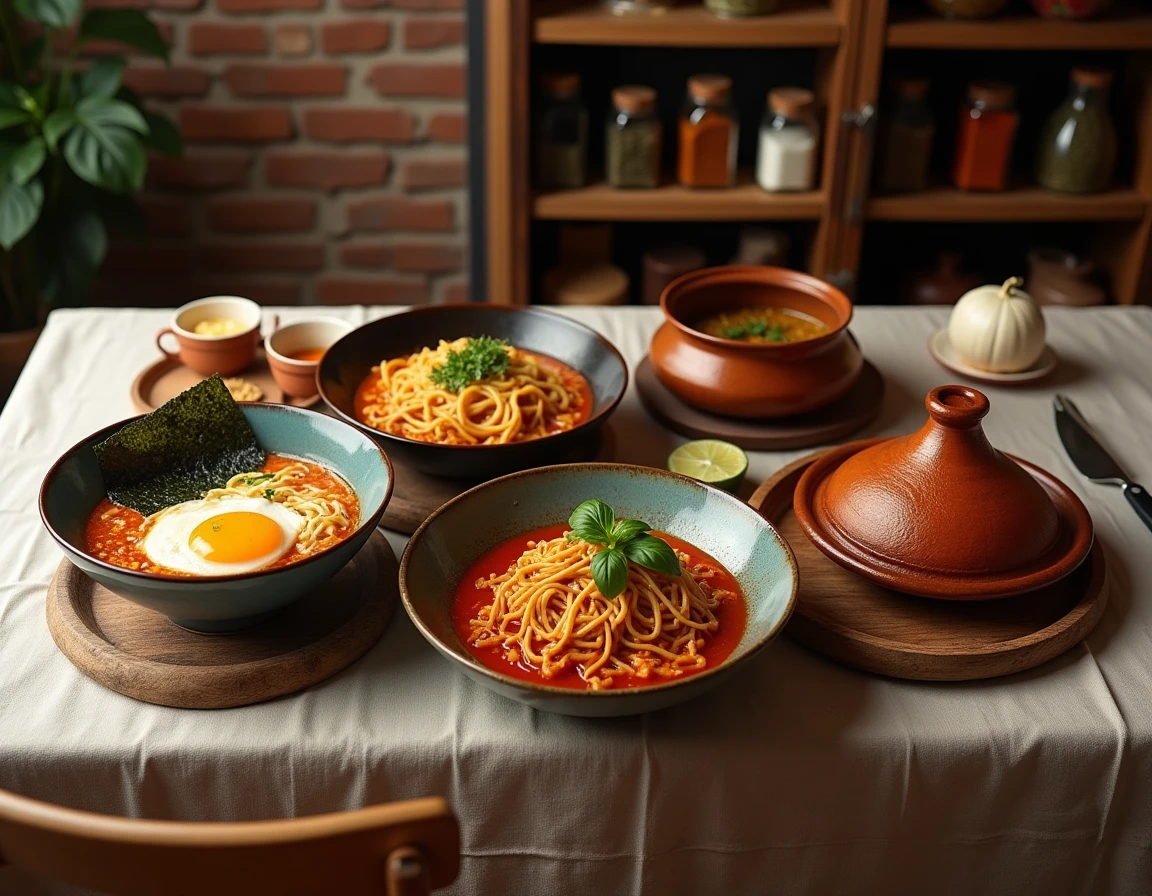
We order a smoked salmon sandwich in a Scandinavian port, devour a plate of fried rice at a crossroads in Bangkok, and indulge in hot chestnuts while strolling through a European city.
Favorite dishes while traveling often have little to do with the great classics highlighted by culinary guides. This gap between a country’s iconic cuisine and what we actually choose to eat on-site tells us something broader about international culinary trends.
Favorite Dishes While Traveling and Iconic Dishes: A Revealing Discrepancy

When travelers are asked what they enjoyed eating the most, the answer is surprising. It’s not the national dishes celebrated in rankings that come up the most, but simple, hybrid specialties closely tied to the context. A raclette plate eaten standing up in Switzerland, a gyros wrapped in kraft paper in Greece, a bowl of phở devoured at six in the morning in an alley in Ho Chi Minh City.
Discussions in online traveler communities confirm this observation. The dishes mentioned as favorites are rarely those promoted by tourist offices. What matters is practicality, price, and the emotional memory attached to the moment. A dish eaten in the rain at a night market leaves a stronger impression than a tasting menu reserved three months in advance.
To explore international flavors on Monde Gourmandises, this approach is also evident, contrasting expected dishes with those we end up adopting in real situations.
This discrepancy has a direct consequence on culinary trends: restaurateurs adapt their menus to the tastes of visitors, not to a fixed local tradition. Street food is gaining ground everywhere because it aligns with what people really want to eat when they travel: quickly, well, without protocol.
Street Food and New Culinary Capitals: The Rise of Cities Like Ho Chi Minh City
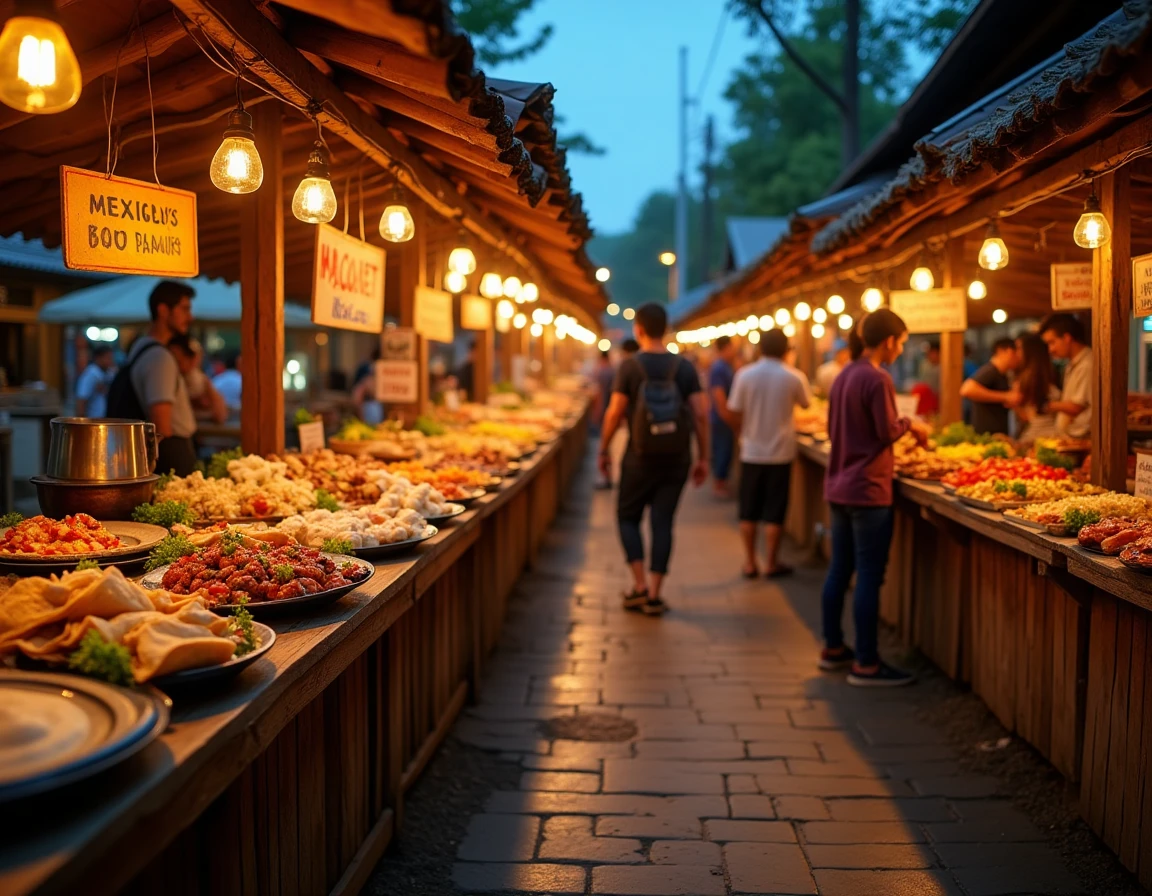
The map of culinary destinations is being redrawn. We no longer think in terms of countries but cities, and some metropolises are establishing themselves as references thanks to their street food scene.
Ho Chi Minh City is regularly cited among the best culinary destinations in the world. What sets it apart is a mix of traditional Vietnamese dishes, international influences, and a density of street food stalls found on every corner. You can eat bánh mì at any hour, and discover soups whose recipes vary from one neighborhood to another.
This trend goes beyond the Vietnamese case. Several recent rankings show that street food capitals are now capturing the attention of gourmet travelers. The criterion is no longer Michelin-starred gastronomy, but accessibility, diversity, and the blending of flavors.
What Makes a City a Food Destination
- A vibrant street food tradition, with stalls run by families for several generations, not just recent concepts
- A culinary fusion visible on plates, where influences from several countries intersect without attempts to separate them
- Prices that allow tasting everything, encouraging travelers to explore multiple discoveries rather than limiting themselves to one restaurant per day
Less Visible Cuisines: Dishes Discovered Outside Rankings
Culinary content on social media is following an interesting direction. Creators structure their series like a culinary world tour, but targeting countries and specialties rarely highlighted in usual rankings. We’re talking about dishes from the Caucasus, West Africa, Central Asia, regions that don’t appear in the top 10 of travel magazines.
These less visible cuisines are becoming drivers of curiosity for a growing segment of travelers. The mechanism is simple: someone films an unknown dish, the video circulates, and suddenly thousands of people want to taste an Uzbek manti or a Senegalese thiéboudiène.
This phenomenon alters the very notion of “favorite dish in the world.” We are no longer just talking about pizza, sushi, or tacos. The list is expanding, diversifying, and above all, it changes depending on who is responding and where that person has traveled from.
The Effect of Social Media on Culinary Discovery
The short video format has transformed how we discover a country’s cuisine. In just a few seconds, we see a dish being prepared, served, and tasted. The visual replaces text as the trigger for culinary desire. Reactions vary on this point: some travelers say these videos create unrealistic expectations, while others claim they have encouraged them to venture off the beaten path.
What is measurable is the emergence of culinary destinations that were not on travelers’ radars a few years ago. Gastronomy is becoming a travel motif in its own right, not just a bonus.
International Culinary Trends: What Is Changing in Plates
Several underlying movements overlap and redefine favorite dishes on a global scale. We observe them both on restaurant menus and in ordering habits.
- The plant-based shift of certain classics: meatless versions of traditional dishes are appearing in countries where meat cuisine dominated, using umami techniques borrowed from Japanese cuisine to compensate for the absence of animal proteins
- Multi-origin hybridization: a dish can now combine influences from three or more cuisines, surpassing the classic French-Japanese or Tex-Mex fusion
- The valorization of local products and short supply chains, even in countries where mass tourism pushed towards menu standardization
- The return of ancestral techniques like fermentation or cooking over fire, redefining the expected flavors of a dish
These trends are not mutually exclusive. The same restaurant can offer a plant-based curry inspired by both Korean and Thai cuisine. The boundaries between national cuisines are blurring in favor of combinations dictated by taste and product availability.
The global tour of favorite dishes is no longer limited to a fixed list of specialties by country. What is emerging is a fluid map where flavors circulate, where cities matter more than nations, and where the dish we remember from a trip is often one we hadn’t planned to taste.