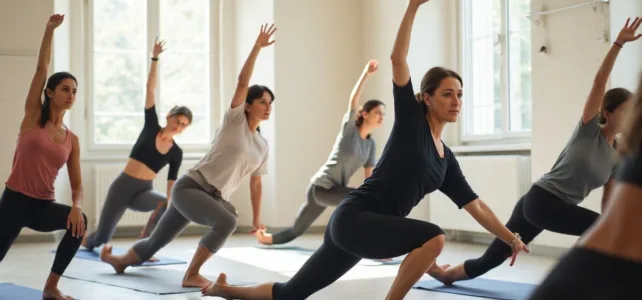
In a world where physical and mental well-being takes center stage, yoga and Pilates have established themselves as essential practices. Often confused but fundamentally distinct, these disciplines offer various benefits that cater to the needs of many practitioners. For both novices and experienced individuals, understanding the nuances between these two forms of exercise is essential to optimize sessions and achieve personal goals.
Origins and philosophies
Understanding the historical and philosophical roots of yoga and Pilates helps to appreciate their richness and diversity.
You may also like : Where to go on vacation in July?
- Yoga: born in India thousands of years ago, yoga is both a physical, mental, and spiritual discipline. It aims for the union of body and mind through postures, breathing exercises, and meditation.
- Pilates: developed in the 20th century by Joseph Pilates, this method draws inspiration from various disciplines such as gymnastics, dance, and martial arts. It primarily focuses on strengthening the deep muscles and stabilizing the core.
Distinct goals and benefits
The expectations of practitioners often influence the choice between yoga and Pilates. The benefits are varied and allow targeting different dimensions of well-being.
Yoga, by its holistic nature, emphasizes flexibility, relaxation, and mastery of the mind. The postures, also known as asanas, are designed to develop balance and inner harmony. Breathing work, known as pranayama, plays a crucial role in calming the nervous system and promoting concentration.
See also : Pilates in Paris: a journey to balanced well-being
As for Pilates, it primarily targets muscle strengthening and posture improvement. The exercises intensely engage the abdominal muscles and stabilizing muscles, thus offering better posture and reducing back pain. The emphasis is on the quality of movement rather than quantity, advocating for precision that prevents injuries.
Approaches and techniques
The methods employed in each of these practices are unique and shape the experience of practitioners.
In yoga, the diversity of styles – from gentle yoga like Hatha to the more dynamic Vinyasa – allows sessions to be tailored to individual needs and energy levels. Each style offers a different approach while remaining true to the idea of uniting body and mind.
Pilates, on the other hand, comes in two main forms: mat and equipment-based. Mat work is often complemented by small accessories to intensify the exercises, while machines like the Reformer provide varied resistance for deeper work. You can consult this comprehensive article for more information, including how to get started with this practice.
Who is it for and why?
The profiles of practitioners and their personal motivations largely influence adherence to one discipline or the other.
- Yoga appeals to those seeking serenity and personal development. Individuals interested in the philosophical and spiritual aspects of the practice will find in yoga a path to fulfillment.
- Pilates often attracts those looking to improve their physical condition in a targeted manner, specifically strengthening the core. Athletes and dancers, for example, find it an effective complement to their training.
The choice between yoga and Pilates depends on numerous factors, ranging from personal preferences to specific health goals. Each of these disciplines offers a unique experience that, when pursued with dedication and intention, can significantly transform the body and mind. Exploring these practices allows for the discovery of not only new dimensions of well-being but also the development of a deeper connection with oneself.