
Bananas are the most widely eaten fruit in the world, and their reputation as a healthy snack that curbs hunger is well established. Whenever stress, cramps or end-of-day fatigue come up, bananas are almost always recommended.
Their micronutrients (potassium, magnesium, tryptophan and vitamin B6) give them an interesting profile for muscle relaxation and preparing for sleep. The key is to distinguish what this fruit’s nutritional makeup can actually do from what it is sometimes too readily credited with.
Tryptophan and serotonin: what bananas really trigger in the body
The mechanism most often cited to justify eating a banana in the evening involves tryptophan. This amino acid is a precursor to serotonin, a neurotransmitter involved in regulating mood and anxiety. Serotonin is itself converted into melatonin, the hormone that signals to the body that it is time to sleep.
Bananas do contain tryptophan. Vitamin B6, also found in the fruit, plays a role in producing these neurotransmitters. On paper, the metabolic pathway makes sense: tryptophan, then serotonin, then melatonin.
The caveat is the amount. A banana provides a modest dose of tryptophan compared with other food sources such as poultry, eggs or legumes. So the question is not whether bananas contain tryptophan, but whether the amount in a single fruit is enough to have a noticeable effect on stress or falling asleep. The available evidence does not settle this specific question for bananas eaten on their own.
Potassium, magnesium and nighttime cramps: a less direct link than you might think
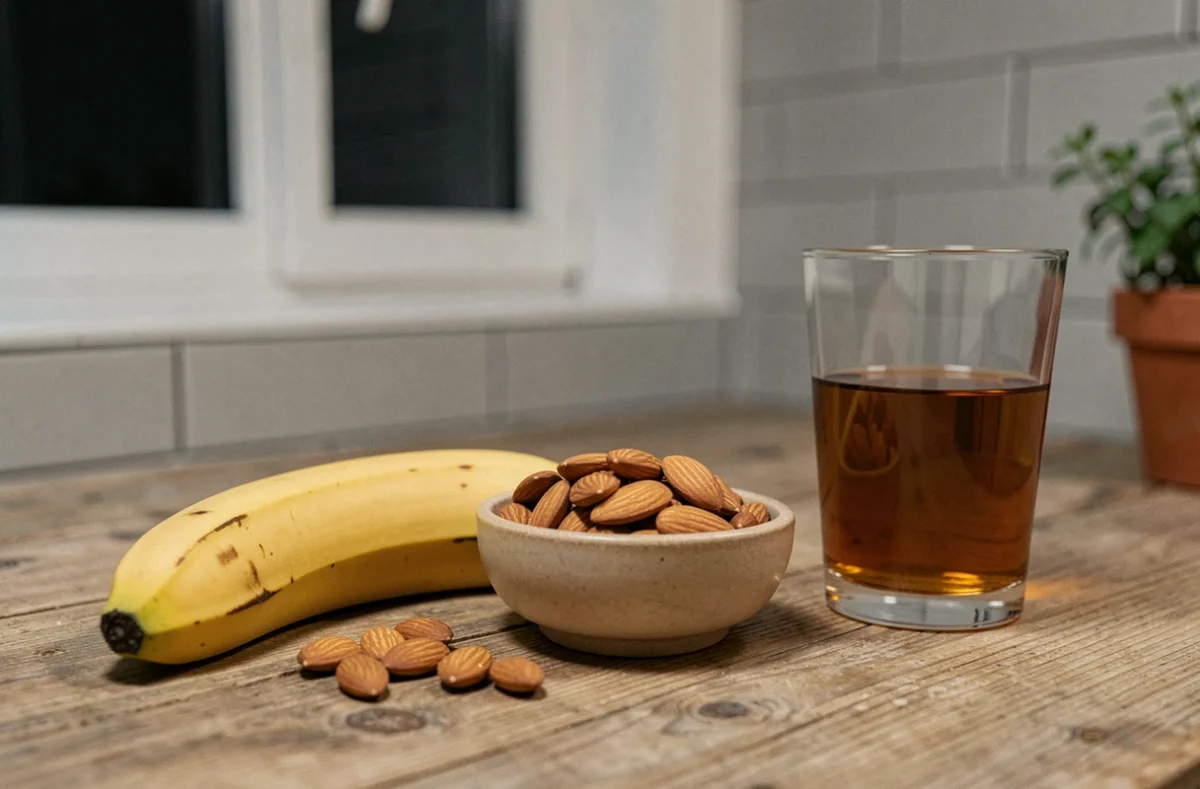
Bananas are rich in potassium and provide magnesium, two minerals associated with muscle function. The connection seems obvious: eating a banana in the evening could prevent nighttime cramps. This idea is widely circulated, including in health publications.
Nighttime cramps have many possible causes: dehydration, muscle fatigue, nerve compression and side effects from certain medications. They do not necessarily indicate a potassium deficiency. The fact that a food contains potassium does not mean it will address the cause of a cramp.
As for magnesium, a 2020 Cochrane review concluded that magnesium supplementation is unlikely to significantly prevent nighttime cramps in older adults. If even a measured supplement has not shown a clear benefit, the amount of magnesium in a single banana is far below the amounts tested in these trials. Results for pregnant women are also contradictory.
What bananas can do for your muscles
Regular intake of potassium and magnesium supports normal muscle function. Bananas contribute to this, just like other fruits and vegetables. Claiming that they specifically prevent nighttime cramps goes beyond what current evidence allows us to say.
- Dietary potassium supports electrolyte balance, but does not treat cramps that are not caused by a deficiency.
- The amount of magnesium in a banana is modest compared with the doses used in clinical studies.
- An overall diet rich in minerals (fruit, vegetables and nuts and seeds) will always be more effective than eating a single fruit now and then.
Bananas in the evening and sleep: a real effect on satiety, a supposed effect on falling asleep
One point that is rarely disputed is satiety. The fiber in bananas, including prebiotic fiber, slows digestion and helps prevent nighttime hunger pangs. A banana satisfies hunger without adding too many calories, reducing the likelihood of reaching for a heavier snack before bed.
Prebiotic fiber feeds beneficial gut bacteria. Comfortable digestion at night reduces brief awakenings caused by stomach discomfort. This is probably the most tangible way bananas can contribute to a better night’s sleep.
When it comes to falling asleep, the combination of tryptophan, magnesium and potassium makes bananas theoretically beneficial. However, no study has isolated the effect of eating a banana in the evening on sleep duration or quality. Any benefits observed could be due to a combination of factors: a light meal, a calming routine and avoiding stimulants.

Fatigue and stress: bananas can help, but they are not a solution
Chronic fatigue and stress can have many causes: accumulated sleep deprivation, mental overload, an overall unbalanced diet or a sedentary lifestyle. Bananas provide vitamin B6, potassium and carbohydrates that the body can use quickly, making them a suitable snack when you need a quick energy boost.
What vitamin B6 actually does
Vitamin B6 is involved in the synthesis of several neurotransmitters, including serotonin and dopamine. Getting enough B6 helps support emotional stability and stress management. Bananas provide a significant share of the daily requirement for this vitamin.
This does not mean that a banana can undo the effects of a demanding day. Improvements after a dietary change may have many causes: a placebo effect, better hydration at the same time or a reduction in pro-inflammatory foods. Attributing an overall improvement in well-being to a single food is an oversimplification.
Who might want to avoid eating a banana in the evening
- People with kidney disease should monitor their potassium intake and consult their doctor before adding a daily banana to their diet.
- People with diabetes can eat bananas, but may want to choose a moderately ripe fruit (which has a lower glycemic index) and pair it with a source of protein or fat.
- People who have trouble digesting fermentable fiber may experience bloating, especially if the banana is very ripe.
Bananas remain an affordable, accessible and nutrient-dense fruit. As an evening snack, they offer an interesting combination of nutrients that may support relaxation and satiety. Expecting them to solve recurring cramps, chronic stress or insomnia is asking more than a single fruit can deliver. Including bananas in a balanced diet and a calming end-of-day routine is a more realistic approach than treating them as a standalone remedy.