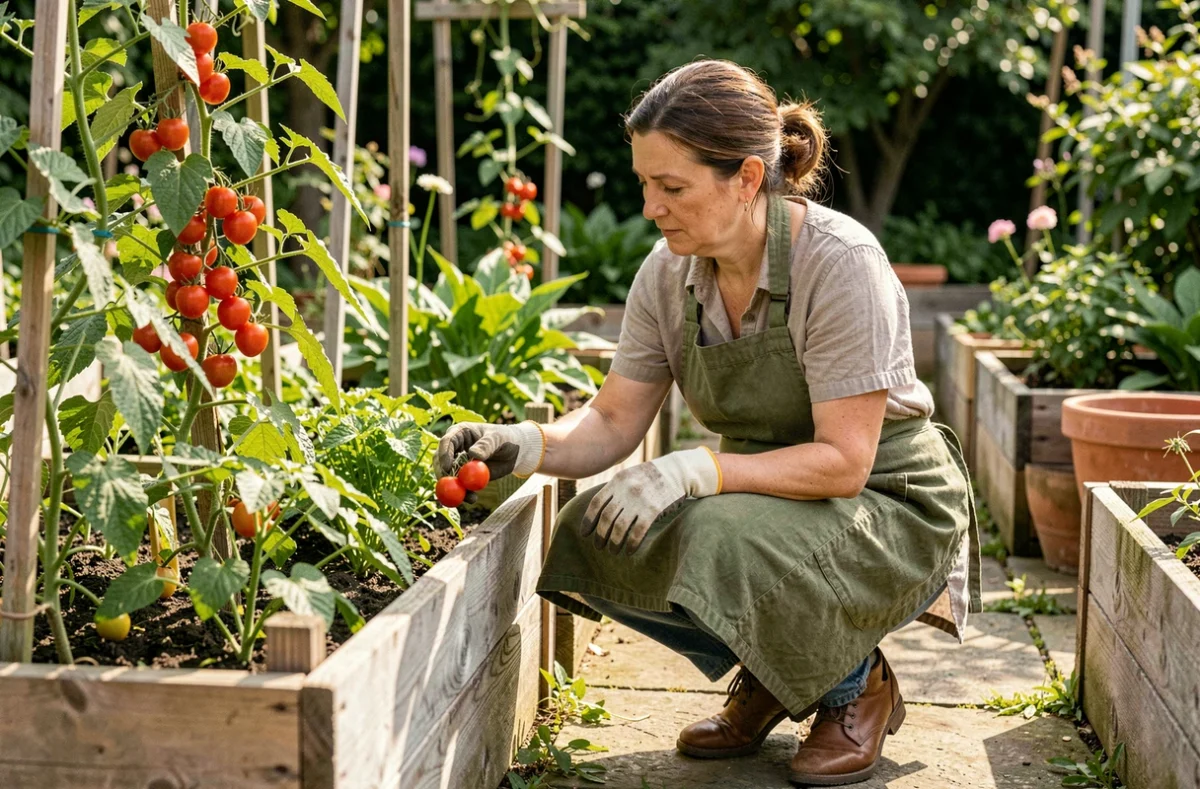
In France, drought-related water restrictions can now extend well beyond summer and vary from one river basin to another. Growing tasty vegetables in your garden all year round therefore means dealing with constraints that go beyond a simple sowing calendar. Soil, water, emerging pests, winter protection: every season calls for trade-offs, and one-size-fits-all solutions are no longer enough.
Water restrictions and vegetable gardens: a factor the sowing calendar doesn’t account for
Most growing guides provide a fixed watering schedule. The problem is that local water restriction orders can change during the season, sometimes several times a month.
Depending on the alert level (watch, alert, heightened alert, crisis), permitted watering times for home vegetable gardens become more limited, up to a complete ban at crisis level. These rules vary from one area to another: two neighboring municipalities in different river basins may be subject to different alert levels.
Before drawing up a watering plan for the season, check Vigieau or the current local water restriction order to find out what is actually permitted. A vegetable garden designed to reduce its reliance on water (thick mulch, low-water varieties, drip irrigation) is better able to withstand these periods. You’ll find suitable varieties and mulching supplies at Atmosphère du Jardin’s vegetable garden section, which brings together plants, seeds, and useful accessories for this purpose.
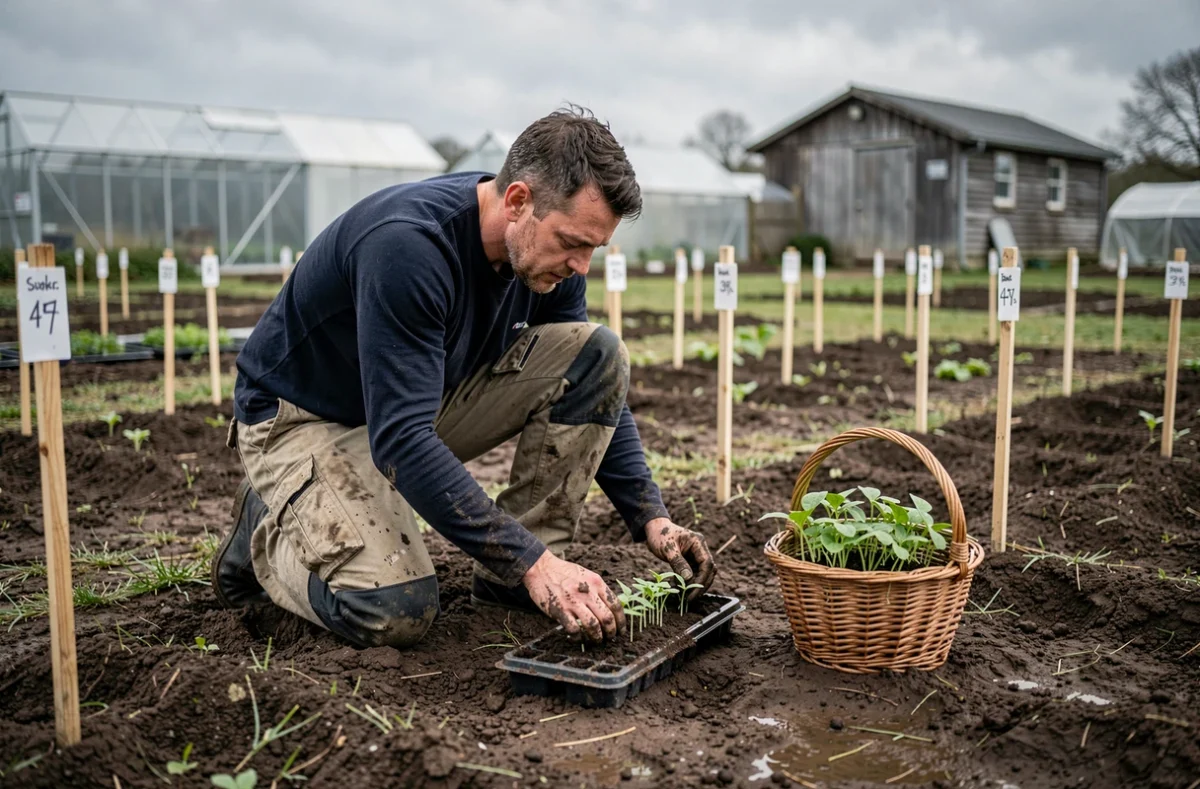
Living soil in the vegetable garden: what the earth needs in each season
Compacted or depleted soil produces bland vegetables, whatever the variety. The flavor of your harvests depends directly on the soil’s biological activity.
Autumn and winter: nourish the soil without digging it over
In autumn, covering the soil with a mulch of fallen leaves, straw, or wood chips protects soil life through the winter. Bare soil loses its structure and nutrients in winter through leaching. Applying mature compost to the surface without digging it in feeds earthworms and microorganisms, which work the soil for you.
Spring: observe before taking action
In spring, it’s tempting to dig the soil to “aerate” it. Simply pushing a digging fork into the ground without turning it over is enough to loosen the top few centimeters. The soil should be drained (neither sticky nor waterlogged) before you do any work. Planting or sowing in cold, waterlogged soil slows germination and encourages damping off.
- Autumn: cover the surface with several centimeters of raw organic matter (leaves, straw, wood chips) to protect the soil from frost and leaching.
- Winter: spread mature compost over the surface without digging it in, and let soil organisms incorporate it naturally.
- Spring: wait until the soil has drained, loosen it with a digging fork without turning it over, then sow or plant.
- Summer: maintain a permanent mulch around crops to limit evaporation and reduce water needs.
Stagger vegetable harvests across all four seasons
Growing vegetables all year round doesn’t mean forcing tomatoes in January. The realistic goal is to always have something to harvest by choosing crops suited to each season.
In spring, early crops (radishes, lettuce, peas, carrots) can be sown as soon as the soil warms up. Staggering sowings every two to three weeks prevents a peak harvest followed by an empty vegetable garden.
Summer remains the season for heat-loving crops: tomatoes, zucchini, peppers, and beans. These plants need regular watering, making it all the more important to keep track of local water restrictions, as mentioned above.
In autumn, lamb’s lettuce, spinach, cabbage, and turnip sowings take over. These vegetables tolerate low temperatures and continue growing slowly through the winter, especially under light protection (fleece or a cold frame).
In winter, you harvest vegetables sown in autumn: leeks, cabbage, lamb’s lettuce, and spinach. Jerusalem artichokes and parsnips can be left in the ground and harvested as needed.
Emerging pests in the vegetable garden: the case of the brown marmorated stink bug
Traditional growing guides list aphids, slugs, and blight. One lesser-known pest deserves particular attention: the brown marmorated stink bug, identified by Anses and Inrae.
This insect damages the leaves, stems, and fruit of several vegetable garden crops, particularly beans and peppers. Its feeding punctures deform the fruit and create necrotic areas that compromise the harvest.
The Agiir app lets you report sightings and contribute to collective monitoring. In autumn, the brown marmorated stink bug seeks shelter to overwinter and often enters homes through openings. Checking garden crops and openings around the home is therefore a two-pronged precaution to take from September onward.
Unlike aphids, the brown marmorated stink bug has no well-established natural predator in France, which limits the biological control options currently available. There is still a lack of data on how effective local beneficial insects are against this pest, and observation reports submitted through Agiir will help fill this gap.
Protecting vegetable garden crops in winter without a heated greenhouse
A heated greenhouse is a major investment and uses energy in a way that is not very compatible with a home vegetable garden. Simple covers are enough to extend the growing season by several weeks.
Row cover fleece, placed directly over crops or stretched over hoops, creates a microclimate that is a few degrees warmer than the surrounding air. A cold frame (a glazed frame placed on the ground) protects early February–March sowings and winter salads.
A low plastic tunnel is still the most affordable option for rows of vegetables. It can be made using metal hoops and plastic sheeting at a modest cost. Ventilating it during the day prevents condensation and fungal diseases.
These covers won’t turn your vegetable garden into a tropical greenhouse. They allow you to grow hardy vegetables (lamb’s lettuce, spinach, cabbage, leeks) in good conditions without artificial heating. Choosing varieties suited to cold weather remains the key to a productive winter vegetable garden.