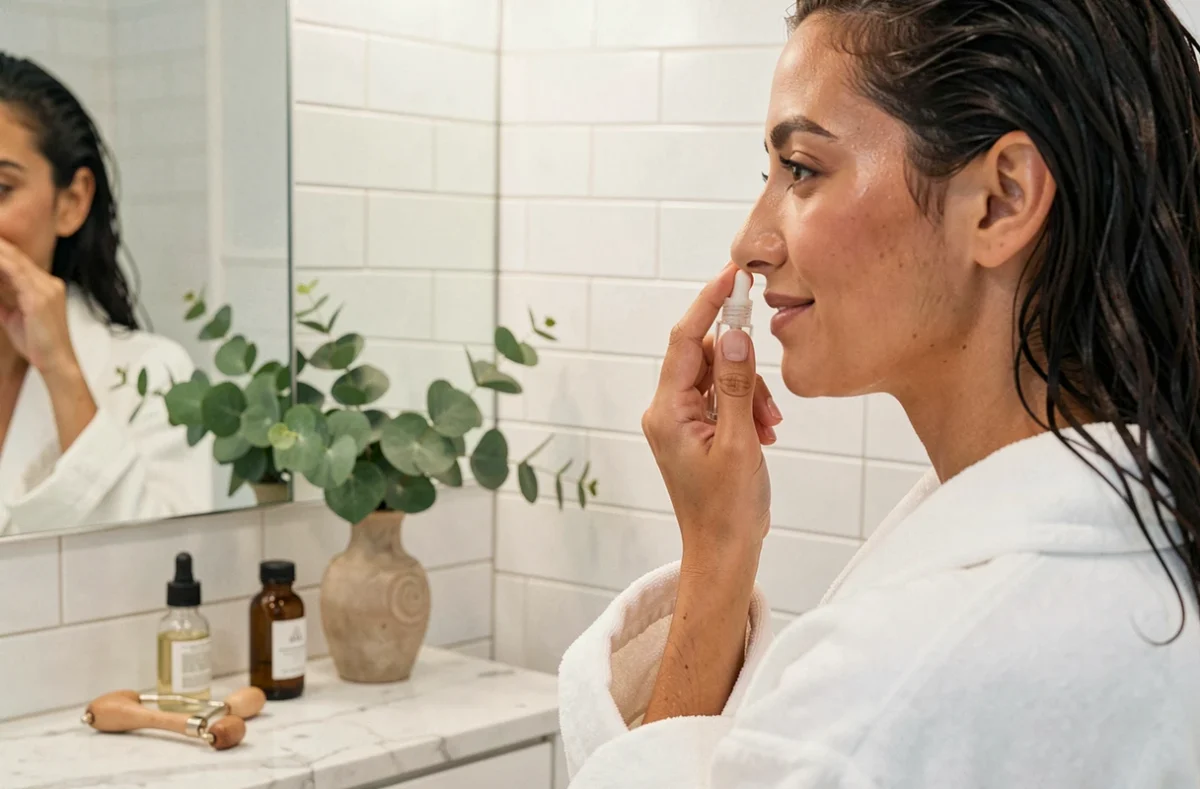
Natural beauty refers to skin and hair cared for with regular steps tailored to their needs, without layering on products or following complex routines. The term covers not only the products you choose, but also how you apply them, how often you follow your routine, and the lifestyle habits that support your skin from within.
The skin barrier and a radiant complexion: the first mechanism to understand
Before discussing creams or ingredients, it’s important to understand a key concept: the skin barrier. This outer lipid layer helps retain water in the epidermis and shields it from external aggressors such as pollution, wind, and temperature changes. When it’s intact, the skin reflects light evenly, creating the radiance we’re after.
When the barrier is compromised, skin can feel tight, become red, produce excess oil, or look dull. Most overly complicated beauty routines damage this barrier by layering active ingredients that aren’t designed to be used together.
The American Academy of Dermatology recommends introducing products one at a time and prioritizing a moisturizer and sunscreen. This approach protects the skin barrier rather than weakening it, and is enough to reveal the secrets of natural beauty that overloaded routines often conceal.

Facial cleansing: why doing one step well makes all the difference
Cleansing is the most underestimated and most poorly performed step. A cleanser that’s too harsh strips away the protective lipids in the skin barrier. The skin responds by producing excess oil (oily skin) or becoming dry (dry skin). In either case, radiance fades.
What cleansing should do
A good cleanse removes three things: pollution residue, excess oxidized sebum, and traces of makeup or sunscreen. It shouldn’t strip away anything else.
In most cases, one product is all you need. Gentle formulas without harsh sulfates respect the skin’s hydrolipidic film. Effective cleansing should never leave your skin feeling tight. If your skin feels this way after rinsing, your cleanser is too strong for your skin type.
How often to cleanse and water temperature
Two cleanses a day are enough: morning and evening. Lukewarm water is preferable to hot water, which dilates blood vessels and dries out the epidermis. In the morning, a simple rinse with lukewarm water can replace cleanser if your skin isn’t oily or prone to blemishes.
Daily sun protection: the most overlooked beauty step
Most articles on natural beauty focus on evening skincare or active ingredients. Sun protection, however, helps prevent most signs of premature aging and uneven skin tone.
Wear sunscreen every day, including in winter and on cloudy days. UVA rays pass through clouds and windows. The AAD recommends a broad-spectrum, water-resistant sunscreen with an SPF of at least 30, reapplied every two hours during outdoor activities.
For everyday use in the city, apply it in the morning under your moisturizer (or use a moisturizer with SPF). Reapplication is necessary if you’re exposed to the sun for an extended period.
- Choose a broad-spectrum sunscreen (UVA + UVB) with an SPF of at least 30 that suits your skin type (a fluid for oily skin, a cream for dry skin).
- Apply a generous amount to your entire face, neck, and ears—areas often overlooked that can reveal signs of skin aging.
- In summer, reapply every two hours and after swimming, even if the product is water-resistant.

Skin hydration: understanding internal and external hydration
Skin hydration works on two complementary levels. The first is internal: the water you drink supports blood circulation and the delivery of nutrients to skin cells. The second is external: moisturizer forms a film that prevents water already present in the epidermis from evaporating.
Confusing the two can lead to common mistakes. Drinking more water won’t make up for skin exposed to the wind without protection. Conversely, even the best moisturizer in the world can’t compensate for overall dehydration.
Choosing a moisturizer for your skin type
Dry skin benefits from rich textures containing occlusive ingredients (shea butter, plant oils). Combination to oily skin does better with lightweight gels or fluids containing hyaluronic acid or glycerin, which draw in water without feeling heavy.
One well-chosen moisturizer is better than layering three serums. Too many layers can overwhelm the skin barrier and cause reactions such as breakouts, tightness, or shine.
A minimalist beauty routine: the steps that really matter
A minimalist approach doesn’t mean eliminating all skincare. It means keeping only the products proven to work for your skin type and using them consistently.
- Morning: gentle cleanse, suitable moisturizer, sunscreen. Three products, three minutes.
- Evening: cleanse (double cleanse if you’re wearing makeup or a thick layer of sunscreen), then apply moisturizer or a night treatment.
- Once or twice a week: gentle exfoliation to remove dead skin cells and encourage cell turnover, without abrasive scrubs that irritate the skin.
- Adjust with the seasons: use a richer texture in winter, when cold weather and indoor heating dry out the air, and a lighter one in summer.
This routine takes just a few minutes morning and evening. Consistent habits deliver better results than sophisticated products. A basic moisturizer applied every day will outperform an expensive serum used sporadically.
Diet also plays a practical role. Fruits rich in antioxidants and vitamin C support collagen production. Healthy fats (avocado, nuts, olive oil) nourish the skin from within. Finally, sleep is when cell regeneration is most active, so cutting it short shows directly in your complexion.
Natural beauty doesn’t depend on a miracle product or a seasonal trend. It comes down to three daily steps (cleanse, moisturize, protect), understanding your own skin, and having the patience to let a simple routine work over time.