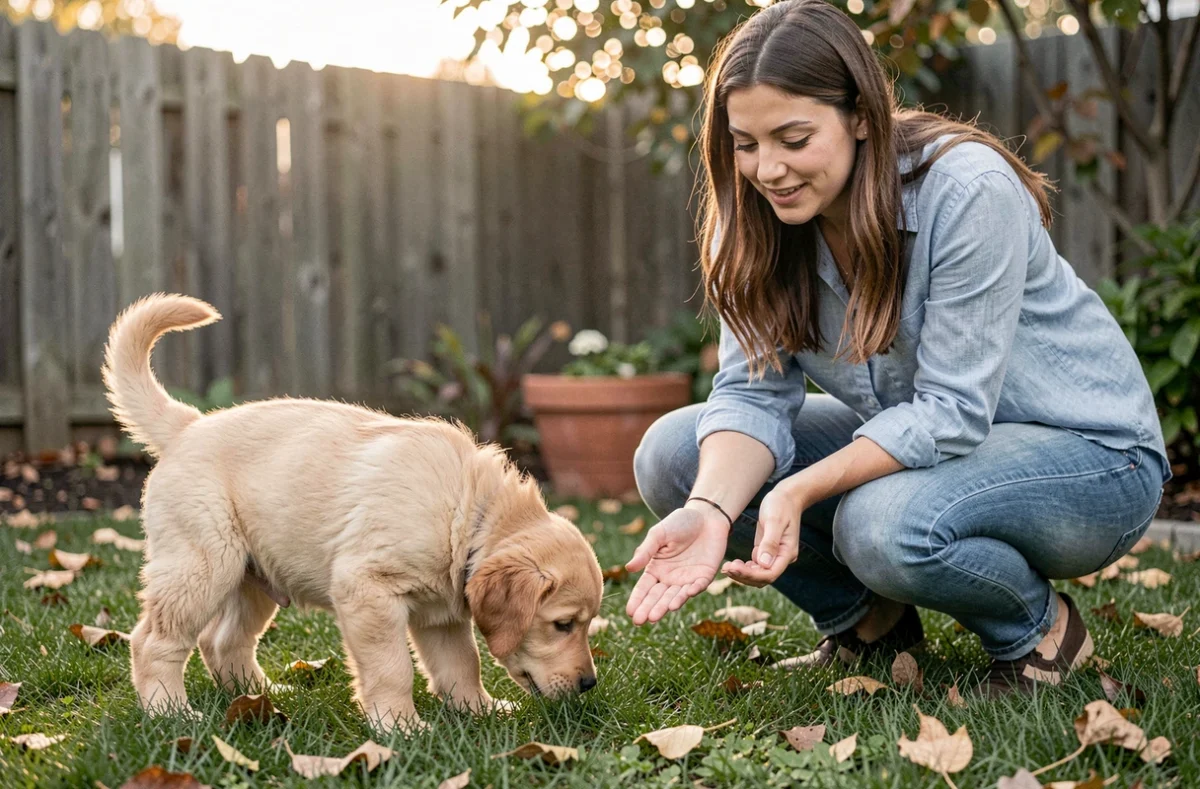
At two months, a puppy’s bladder operates in short and unpredictable cycles. The urethral sphincter has not yet developed the neuromuscular maturity to ensure prolonged retention. Teaching a 2-month-old puppy to be house-trained relies less on discipline and more on careful management of timing and environment.
Outings and socialization window: do not wait for complete vaccination
We regularly observe owners who confine their puppy until the end of the vaccination protocol, sometimes beyond four months. This approach significantly delays house-training.
The American Veterinary Society of Animal Behavior (AVSAB) recommends socialization as early as 7 to 8 weeks, after the first vaccination, in a controlled environment. Practically, this means that the puppy can go outside to learn to eliminate outdoors, provided that highly frequented areas with unknown dogs (dog parks, crowded urban walking areas) are avoided.
The most sensitive socialization period is between 3 and 14 weeks according to AVSAB. A puppy deprived of outings during this window does not learn about outdoor surfaces, sounds, or the leash, and associates the house as the only place for elimination. To discover British & Co in detail, we recommend cross-referencing information with your veterinarian to adapt the outing schedule to the local health context.
Prefer a private garden, a quiet sidewalk, or a low-traffic patch of grass. The goal is not a walk, but outdoor elimination, repeated several times a day.
Retention capacity at 2 months: adjust outing intervals
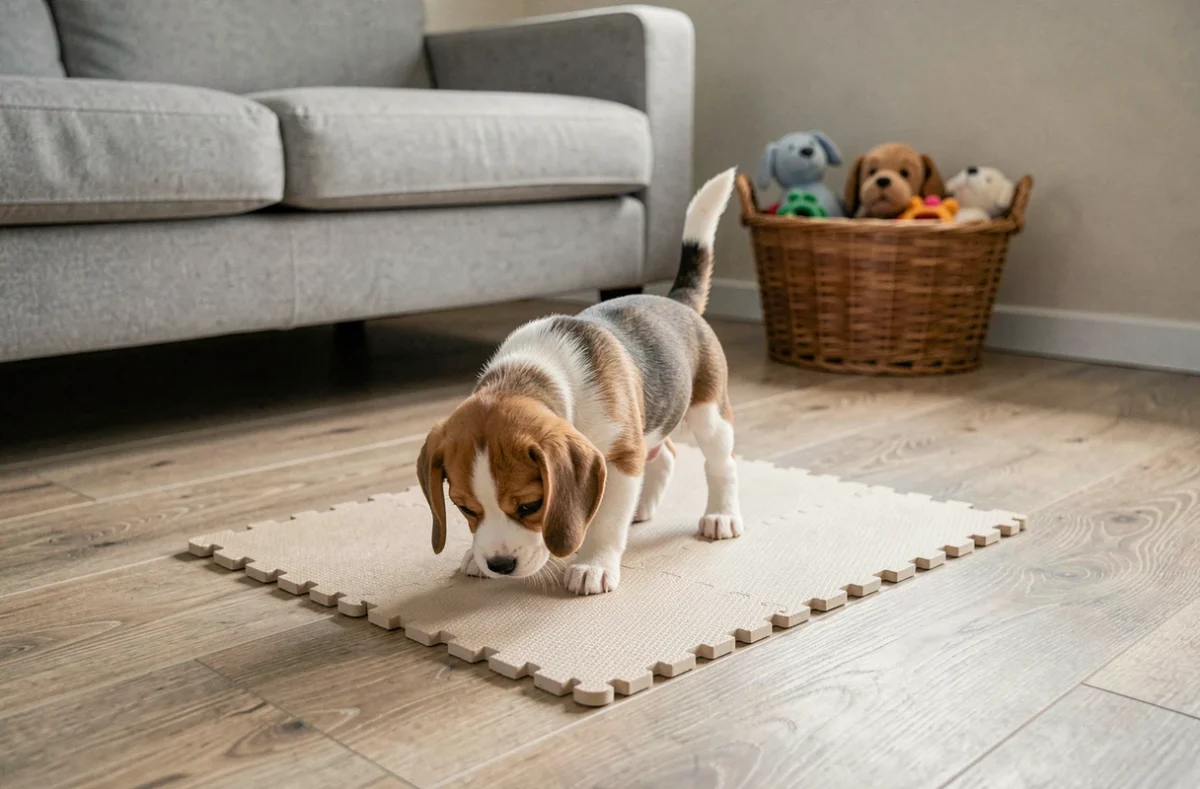
A 2-month-old puppy cannot hold it for more than one to two hours during the day. The often-cited rule of thumb (one hour per month of age, plus one) gives a rough estimate, not a guarantee. In practice, retention depends on breed size, hydration, level of excitement, and ambient temperature.
The critical moments are predictable:
- Upon waking (from a nap or night), the puppy eliminates within two minutes of opening its eyes. The outing must be immediate, without detours to the food bowl.
- After each meal, the gastro-colic reflex triggers a need within a very short time. We recommend taking the puppy out within five to ten minutes after finishing the meal.
- After a play session or excitement (arrival of a visitor, handling), stress or physical activity speeds up transit and bladder filling.
Outside of these windows, a systematic outing every hour during the day significantly reduces indoor accidents. At night, metabolism slows down, and retention naturally increases.
Positive reinforcement and timing of rewards
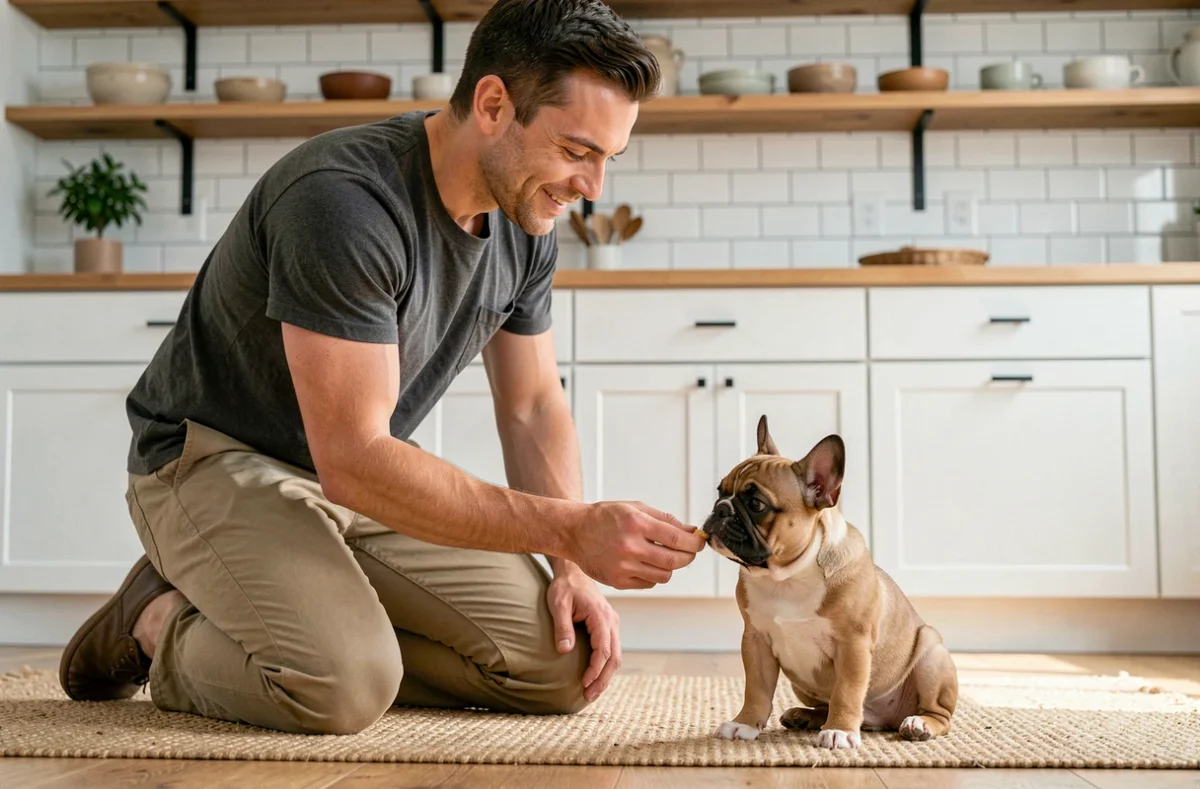
The puppy only associates a consequence with its behavior if it occurs within two seconds of the action. Rewarding upon returning to the house, even thirty seconds after elimination, has no effect on learning. The treat or verbal praise must come at the precise moment the puppy finishes urinating or defecating, not during (which can interrupt elimination).
The type of reward also matters. A high-value treat (small pieces of cheese, cooked chicken cubes) far surpasses regular kibble. The perceived value of the reward determines the speed of behavior acquisition.
Punishment and regression: what physiology dictates
Scolding a puppy after an accident is counterproductive. At two months, the prefrontal cortex is not developed enough to establish a causal link between a past act and a present reprimand. The puppy associates punishment with your presence, not with elimination. The classic result: it hides to urinate behind a piece of furniture.
A sudden regression in a puppy that seemed to be progressing may signal a medical issue. Very frequent urination, straining to urinate, or whining should prompt a veterinary consultation. Urinary infection is underdiagnosed in puppies and mimics a lack of training.
Indoor space management: crate and reasoned confinement
The biological principle is simple: a puppy avoids eliminating where it sleeps. The transport crate or pen takes advantage of this natural tendency to structure house-training, provided the space is proportionate.
A crate that is too large allows the puppy to urinate in one corner and sleep in another, nullifying the mechanism. The crate should allow the puppy to stand up, turn around, and lie down, no more. Removable dividers can adjust the volume as the puppy grows.
Training pads: a crutch to use with caution
The absorbent pad creates an indoor elimination area that can become permanent if the puppy integrates it as a normal substrate. We only recommend its use in two specific cases: an apartment without quick access to the outside, or a documented veterinary quarantine period. In all other cases, the pad delays the transition to the outdoors.
If you use a pad, always place it in the same spot and gradually move it towards the door, then outside. This process takes several weeks and requires absolute consistency in positioning.
Puppy house-training at night: nighttime weaning protocol
At night, a two-month-old puppy can hold it for between three and four hours depending on the individual. Setting an alarm for a nighttime outing, or even two at the beginning, prevents accidents in the crate and preserves the crate-hygiene association.
The nighttime protocol is simple: silent outing, no play, no bright lights. The puppy eliminates, receives a calm reward, then returns to the crate. The goal is for the nighttime outing to remain functional and not recreational; otherwise, the puppy learns to wake you up to play.
Over the weeks, the interval between nighttime outings naturally increases. The majority of puppies sleep through the night between four and five months. Forcing retention before this deadline leads to accidents that undermine the learning achieved.
House-training at two months is never a guaranteed result; it is a process under construction. A puppy that eliminates outside eight times out of ten is on the right track. The consistency of the protocol, not its intensity, makes the difference between learning in a few weeks and a struggle lasting several months.